Ever dropped serious cash on skincare products only to see… absolutely nothing? Yeah, me too.
Spent six months wondering why my skin looked the same despite using a $80 vitamin C serum. Turns out? I was slapping it on after my moisturizer. Which basically means it was just sitting there on top doing absolutely nothing.
The issue wasn’t the product. It was not knowing how to layer skincare in the right order. Get the sequence wrong, and you’re literally creating a barrier that blocks everything from sinking in. Sometimes you’ll even break out because your skin can’t handle the mess you’re creating.
So here’s what I’m going to show you: the exact order to use your products (morning and night), which ones actually matter, how long to wait between steps, and the mistakes I see people make constantly. This works whether you’re brand new to skincare or just trying to figure out why your current routine isn’t working.

What Does “Layering Skincare” Mean?
Think about getting dressed. You don’t put your jacket on before your shirt, right?
Skincare’s the same way. There’s an order that makes sense, and it’s based on texture. Thin, watery stuff first. Thick, creamy stuff last. That’s literally the whole concept.
Here’s why: water-based products (like most serums) need to go on before oil-based ones (like face oils or heavy creams). Water can’t push through oil. But oil can seal water in. Flip that order and your expensive hyaluronic acid serum is basically useless because it’s stuck on top of your moisturizer.
The flow usually goes: watery liquids → lightweight serums → creams → oils → sunscreen. Get that down and you’re already doing better than most people.
Why Skincare Order Matters So Much
Your skin isn’t magic. It can only absorb things in specific ways.Put on a thick moisturizer first? Congrats, you just built a wall. Now that retinol you’re patting on after isn’t reaching your actual skin cells where it needs to work. It’s just hanging out on the surface doing nothing.
Real example: I had a client—let’s call her Sarah—who couldn’t figure out why her retinol wasn’t working. She’d been using it for months. Zero results. I watched her routine once and immediately saw the problem. She was applying retinol after this super thick night cream. We switched the order. Same products, just different sequence. Three weeks later her skin texture had visibly improved.
From a science perspective, active ingredients like vitamin C and retinol need direct skin contact to work. They have to penetrate into deeper layers to stimulate collagen, neutralize free radicals, or speed up cell turnover. Create a barrier, and they’re worthless.
Bottom line: the order isn’t just some optional thing. It’s everything.
The Correct Skincare Layering Order (Step-by-Step)
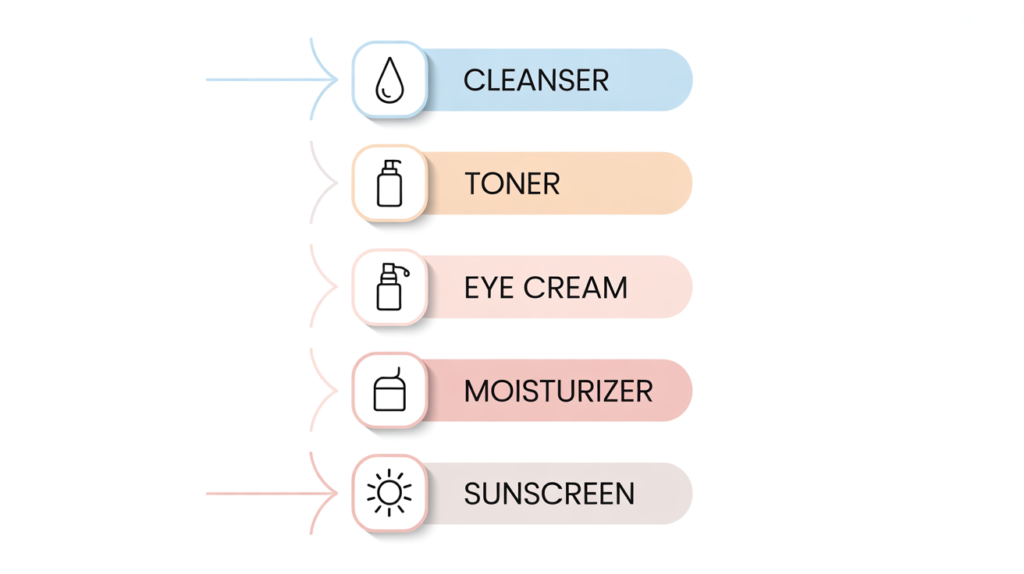
Alright, let’s get into the actual order. Think of this as your blueprint.
Step 1 – Cleanser
Start clean. Always. No negotiations here.
Morning: Keep it gentle. Your face isn’t that dirty when you wake up. A harsh cleanser in the AM just strips away the natural oils your skin actually needs. Go for something hydrating, pH-balanced, not foamy.
Night: This is where you need to work a little harder. If you wear makeup or sunscreen (you better be wearing sunscreen), do a double cleanse. Start with an oil-based cleanser to dissolve all that stuff. Then follow with a water-based cleanser to get everything else off. Your skin should feel clean but not tight or squeaky. Squeaky means you overdid it.
Look for “non-comedogenic” on the label (won’t clog pores). And if you have sensitive or dry skin, avoid anything with sulfates. They’re too harsh.
Step 2 – Toner / Essence
Toners prep your skin for what comes next. But here’s the thing—not all toners are the same.
Hydrating toners: These have ingredients like glycerin or hyaluronic acid. They add moisture and help your serums sink in better. Good for dry or sensitive skin.
Exfoliating toners: These have acids—AHAs (like glycolic or lactic acid) or BHAs (salicylic acid). They remove dead skin and clear out pores. Great for oily or acne-prone skin, but only use them 2-3 times a week. Daily exfoliation will destroy your skin barrier. Don’t do it.
Who can skip toners? If your skin is super sensitive or you’re on prescription retinoids, you might want to skip the exfoliating ones. But honestly, most people benefit from at least a hydrating toner.
Quick tip: apply toner while your skin’s still slightly damp. It absorbs way better that way.
Step 3 – Serums & Treatments
This is where the magic happens. Serums are concentrated actives that target specific problems. They work best when applied straight to clean skin.
Vitamin C Serum (Morning)
Your morning antioxidant. Vitamin C brightens skin, fades dark spots, and protects against damage from pollution and UV rays.
Use it in the morning to maximize sun protection. Look for 10-20% L-ascorbic acid. Apply to damp skin, then wait 5-10 minutes before moving on. I know waiting sucks, but this stuff needs time to work at the right pH level.
Niacinamide Serum
The do-everything ingredient. Shrinks pores, controls oil, strengthens your barrier, calms inflammation. Works morning or night.
Old skincare advice said you can’t mix niacinamide with vitamin C. That’s outdated info. Modern formulas work fine together. Ignore that myth.
Hyaluronic Acid Serum
The hydration heavy-hitter. Holds up to 1000 times its weight in water. Apply this on damp skin to pull moisture in, then seal it with moisturizer.
Works under basically any routine for plump, hydrated skin. Can’t really go wrong here.
Retinol / Retinoids (Night Only)
The gold standard for anti-aging and acne. Speeds up cell turnover, boosts collagen, unclogs pores.
Key rules:
- Night only (makes you sun-sensitive)
- Start low (0.25-0.5%)
- Wait 5-10 minutes after applying before adding anything else
- Always wear sunscreen the next day
Using Multiple Serums
Thinnest to thickest—that’s the rule. But here’s what I learned the hard way: don’t stack multiple strong actives in one night. Your skin will lose its mind. Redness, irritation, wrecked barrier.
Better approach: vitamin C in the morning, retinol at night, acids on different nights from retinol. Your skin will actually thank you.
Step 4 – Eye Cream
The skin around your eyes is thinner than everywhere else. Loses moisture faster, shows aging first.Eye cream handles dark circles, lines, puffiness. Common ingredients: caffeine, peptides, retinol.
How to apply: Ring finger only (lightest touch). Pat gently around the orbital bone. Never rub or tug on that area.
When: After serums, before moisturizer. Some people put it on before serums if it’s super thick, but the standard way works better for most.
Step 5 – Moisturizer
Moisturizer seals everything in. It locks down all the layers you just applied while adding its own hydration and barrier protection. Even oily skin needs moisturizer. Skip it and your skin will actually produce more oil to compensate. Don’t skip this.
Pick based on your skin:
- Oily: Lightweight gel, oil-free
- Dry: Rich creams with ceramides
- Combination: Gel-cream hybrids
- Sensitive: Fragrance-free, minimal ingredients
Apply while your skin’s still a bit damp. Gentle upward motions—don’t pull down.
Step 6 – Sunscreen (Morning Only)
If you do nothing else from this entire guide, do this. Sunscreen is non-negotiable. All those expensive serums? Meaningless without sun protection. UV damage causes 80% of visible aging. No sunscreen means you’re wasting your time and money on everything else.
Why it goes last: Sunscreen needs to form a film on your skin’s surface. Put anything on top and you break that film, making it less effective. Only exception: makeup.
Rules:
- Minimum SPF 30 (SPF 50 is better)
- Broad-spectrum (UVA and UVB)
- Reapply every 2 hours outdoors
- Use about ¼ teaspoon for your face and neck (more than you think)
Types: Chemical sunscreens absorb UV. Mineral (physical) sunscreens reflect it. Both work. Pick what you’ll actually wear daily.
Morning vs Night Skincare Layering
Your AM and PM routines serve different purposes. Morning is about protection. Night is about repair.
Morning Routine Order
Keep it light and protective:
- Gentle cleanser
- Hydrating toner
- Vitamin C serum
- Hyaluronic acid (if you need extra hydration)
- Eye cream
- Light moisturizer
- Sunscreen SPF 30-50
Focus on antioxidants that protect against environmental damage. Everything should absorb quickly and sit well under makeup.
Night Routine Order
Go heavier—this is repair time:
- Double cleanse
- Exfoliating toner (2-3x weekly)
- Treatment serum (retinol, peptides, whatever you’re using)
- Hydrating serum
- Eye cream (can be richer at night)
- Rich moisturizer or sleeping mask
- Face oil (optional, if you’re really dry)
Your skin repairs itself while you sleep. This is when you use strong actives like retinol or prescription retinoids that make you sun-sensitive.
Quick Comparison
| Aspect | Morning | Night |
| Goal | Protection & Hydration | Repair & Treatment |
| Texture | Lightweight, fast | Richer, more emollient |
| Key Actives | Vitamin C, antioxidants | Retinol, acids, peptides |
| Final Step | Sunscreen always | Moisturizer or oil |
| Time | 5-10 minutes | 10-15 minutes |
How to Layer Skincare Based on Skin Type
The order stays the same. What changes is which specific products you pick.
Oily Skin
Produces excess oil but still needs hydration. Key is picking lightweight, non-comedogenic stuff that won’t clog pores.
Morning:
- Gel or foaming cleanser with salicylic acid
- BHA toner (salicylic acid again)
- Light vitamin C serum
- Oil-free gel moisturizer with niacinamide
- Mattifying sunscreen
Night:
- Double cleanse
- AHA or BHA toner (alternate nights)
- Niacinamide serum
- Retinol
- Lightweight moisturizer
Avoid: Heavy creams, rich face oils, anything silicone-heavy that traps oil.
Dry Skin
Lacks both water and oil. Need products that deliver moisture and lock it in.
Morning:
- Creamy hydrating cleanser (no foaming)
- Hydrating toner with glycerin
- Vitamin C
- Hyaluronic acid on damp skin
- Rich cream with ceramides
- Moisturizing sunscreen
Night:
- Gentle milk or oil cleanser
- Hydrating essence
- Peptide or hyaluronic serum
- Retinol (start slow, can be drying)
- Rich night cream or sleeping mask
- Face oil to seal everything
Tip: Apply everything on damp skin. Get a humidifier for your bedroom.
Combination Skin
Oily T-zone. Normal to dry cheeks. Balance is everything.
You can use different products on different zones or just pick balanced gel-cream formulas.
Morning:
- Gentle gel cleanser
- Balancing toner
- Vitamin C (whole face)
- Niacinamide (focus on oily areas)
- Gel-cream moisturizer
- Light sunscreen
Night:
- Gentle cleanser or double cleanse
- Hydrating toner
- Retinol or treatment
- Light moisturizer on T-zone, richer on dry areas
Real talk: Don’t over-strip the oily parts. Harsh cleansing makes your skin produce more oil. Keep it gentle.
Sensitive / Acne-Prone Skin
Less is more. Go minimal with fragrance-free, non-irritating products.
Morning:
- Gentle sulfate-free cleanser
- Soothing toner (centella or chamomile)
- Niacinamide (calms inflammation)
- Light fragrance-free moisturizer
- Mineral sunscreen (less irritating)
Night:
- Gentle cleanser (no scrubs)
- Hydrating toner
- Targeted acne treatment (benzoyl peroxide or azelaic acid)
- Barrier-repairing moisturizer
Rules:
- Patch test on your jawline for 48 hours
- One new product at a time
- Wait 2 weeks before adding another
- Avoid essential oils, fragrance, high alcohol
See a dermatologist for persistent issues
Common Skincare Layering Mistakes to Avoid
Even with good products, bad habits kill results. Here’s what to stop doing.
1. Too Many Actives at Once
Stacking retinol + vitamin C + AHAs + BHAs in one routine? Your skin’s going to riot. Redness, irritation, destroyed barrier.
Fix: Alternate. Vitamin C in the morning. Retinol at night. Acids on different nights from retinol.
2. Wrong Ingredient Combos
Some things don’t play nice:
- Retinol + AHAs/BHAs: Too exfoliating together. Alternate nights.
- Vitamin C + Niacinamide (old formulas): Modern versions are fine, but pure L-ascorbic acid at low pH might conflict. When unsure, separate them.
- Retinol + Benzoyl Peroxide: Can deactivate each other. Different times.
3. Not Waiting Between Layers
Slapping everything on rapid-fire? You’re diluting it all and preventing absorption.
Fix: Wait 30 seconds to 1 minute between most layers. Wait 5-10 minutes after actives like vitamin C and retinol.
4. Skipping Sunscreen
Biggest mistake. Period.
All your anti-aging efforts are useless without sun protection. UV damage causes 80% of visible aging. No sunscreen = wasted effort.
5. Over-Exfoliating
Daily acids or scrubs wreck your skin barrier. You end up with sensitivity, redness, and ironically more breakouts.
Fix: Most people only need exfoliation 2-3 times weekly. Listen to your skin.
6. Applying to Bone-Dry Skin
Humectants like hyaluronic acid need water to work. On completely dry skin, they can actually pull moisture out of deeper layers, making you drier.
Fix: Apply hydrating products to slightly damp skin.
How Long to Wait Between Skincare Layers?
Patience matters. Each product needs time.
General rule: 30 seconds to 1 minute between most layers.
Actives need longer:
- Vitamin C: 5-10 minutes (pH-dependent)
- Retinol: 5-10 minutes (reduces irritation)
- Acids: 5-10 minutes (optimal exfoliation)
Can you skip waiting? If you’re rushed, 30 seconds between non-actives is okay. But never skip the wait after vitamin C or retinol. It impacts effectiveness big time.Sign you’re rushing: Products pilling (rolling up into balls)? You’re using too much or not waiting long enough.
Before jumping into FAQs, here’s a quick visual recap of skincare layering if you want to see it in action: veiw here
FAQs – How to Layer Skincare
How many skincare products should I layer?
Beginners: 4-5 products (cleanser, moisturizer, sunscreen are essential; add serum and toner as you go). Advanced routines can hit 7-10 products, but more isn’t always better. Quality and consistency beat quantity.
Can I mix serums together?
You can mix compatible ones in your palm if they have similar textures and aren’t pH-dependent. But don’t mix actives like vitamin C or retinol with other stuff—messes with their pH and reduces effectiveness.When in doubt, layer separately, thinnest to thickest.
Do I need toner every day?
Depends. Hydrating toners? Daily’s fine for most people. Exfoliating toners with acids? Only 2-3 times weekly to avoid over-exfoliation.If your skin’s irritated or dry, cut back.
Should sunscreen go before or after moisturizer?
After. Always. Sunscreen is the absolute final step in your morning routine.
Why? It needs to form a protective film on your skin’s surface. Put moisturizer on top and you disrupt that barrier, reducing sun protection.
Can beginners follow skincare layering?
Absolutely. Start simple: cleanser, moisturizer, sunscreen. Once comfortable, add one product every 2-3 weeks. This helps you identify what works without overwhelming your skin.
How to layer skincare with retinol?
Apply retinol at night after cleansing and toning on dry skin. Wait 5-10 minutes. Then eye cream and moisturizer. Start 2-3 times weekly, gradually increase as your skin adjusts. Never layer with acids on the same night. Wear sunscreen religiously the next morning.
How to layer skincare vitamin C?
Vitamin C goes morning, after cleansing and toning on slightly damp skin. Wait 5-10 minutes. Then hyaluronic acid, moisturizer, sunscreen. Vitamin C boosts your sunscreen’s effectiveness and provides antioxidant protection all day.
How to layer skincare in the morning?
Morning order: Cleanser → Toner → Vitamin C → Hyaluronic Acid (optional) → Eye Cream → Moisturizer → Sunscreen.
Keep it light and protection-focused. Skip heavy actives like retinol—save those for night.
How to layer skincare at night?
Night order: Double Cleanse → Toner → Treatment Serum (Retinol/Peptides) → Hydrating Serum → Eye Cream → Moisturizer → Face Oil (optional).
Nighttime is for repair. Use your strongest actives and richest products while your skin regenerates.
How to layer skincare morning and night?
Morning focuses on protection (antioxidants, sunscreen). Night emphasizes repair (retinol, richer moisturizers).Both follow the same principle: thin to thick. Just adjust product types based on time of day.
How to layer serums?
Thinnest to thickest. Start with water-based serums (hyaluronic acid), then slightly thicker ones (niacinamide), finish with oil-based if using any. Wait 30-60 seconds between each for absorption.
How to layer skincare and makeup?
After your morning routine including sunscreen, wait 5-10 minutes before makeup. Use primer if you want, but make sure sunscreen’s fully absorbed first. If your makeup has SPF, don’t count on it as your main sun protection. Always use dedicated sunscreen underneath.
Conclusion
Skincare layering isn’t complicated once you get the basics: thin to thick, water before oil, actives on clean skin.Start with the essentials—cleanser, moisturizer, sunscreen. Add targeted serums based on your concerns. The key isn’t using 15 products. It’s using the right products in the right order consistently.
Most actives take 8-12 weeks to show results. Be patient. Your skin didn’t change overnight and won’t transform overnight either.Listen to your skin. If something irritates you, scale back. When unsure, see a dermatologist.Start simple. Build gradually. Stay consistent. That’s it.