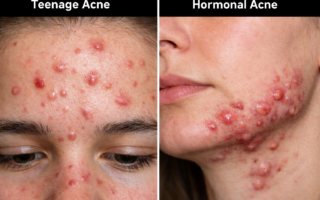
Do acne scars go away? Expert Guide & Timeline. If you’ve ever stared in the mirror and wondered whether those stubborn marks will ever fade, you’re not alone. I’ve spent nearly a decade battling acne scars—trying everything from drugstore creams to professional laser treatments—and spent over $15,000 in the process. Some scars do fade on their own, but many need a carefully planned approach.
In this expert guide and timeline, I’ll reveal exactly which types of acne scars can improve naturally, which ones need treatment, and the proven steps you can take to finally see real results. By the end of this article, you’ll know exactly what works, what doesn’t, and how to save yourself years of trial and error.
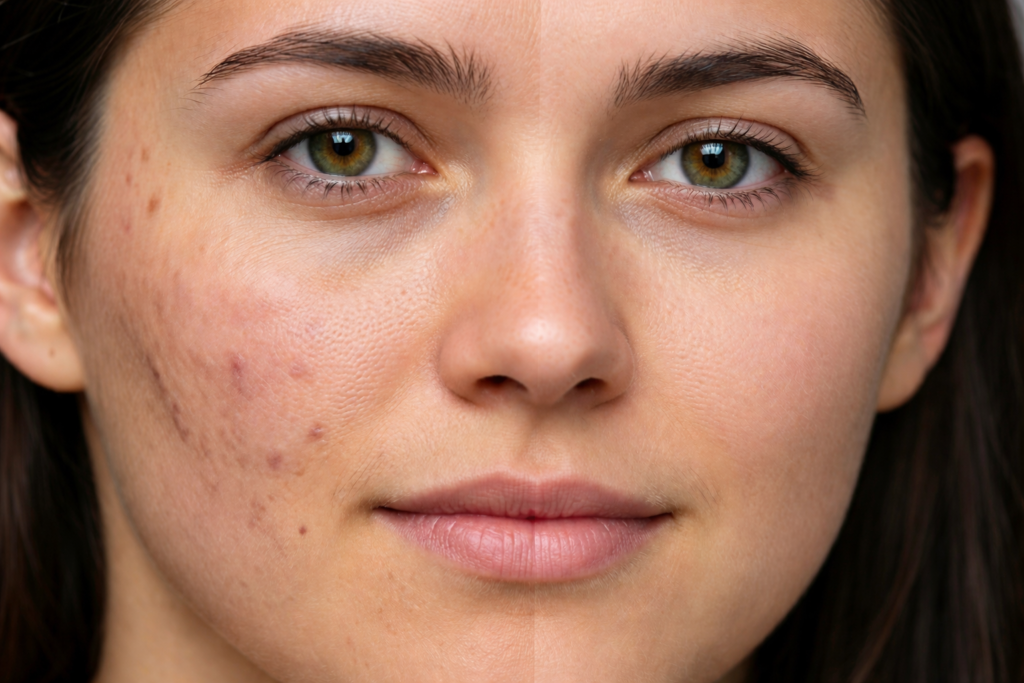
Understanding Acne Scars: What They Are and How They Form
Acne scars develop when inflammatory acne penetrates deep enough to damage your skin’s dermis—the layer containing collagen and elastin. Your body attempts to repair this damage by producing new collagen, but the healing process rarely recreates your original skin perfectly.
What Causes Acne Scars?
I learned this the hard way when I picked at a cystic pimple during college finals. That one moment left me with an ice pick scar still visible five years later. According to the American Academy of Dermatology, inflammatory acne increases scarring risk by nearly 80% compared to mild breakouts.
The scarring process involves improper collagen production. Too much collagen creates raised scars (hypertrophic or keloid). Too little creates depressed scars—those frustrating craters that catch shadows.
Who’s most likely to scar?
- People with severe cystic or nodular acne
- Those who pick, pop, or squeeze pimples (guilty!)
- Anyone who delays treatment (also guilty)
- Individuals with a family history of scarring
- People with darker skin tones (higher PIH risk)
Do Acne Scars Go Away on Their Own?
This is where I need to give you both good and bad news.
Temporary vs. Permanent Acne Scars
Some “scars” aren’t actually scars. I spent two years thinking I had permanent scarring before my dermatologist explained these were just dark spots that would fade. This distinction changed everything.
Will fade naturally:
- Post-inflammatory hyperpigmentation (PIH) – brown/dark spots
- Post-inflammatory erythema (PIE) – red/pink marks
- Superficial discoloration
Won’t fade without treatment:
- Ice pick scars (deep, narrow holes)
- Boxcar scars (broader depressions)
- Rolling scars (wave-like indentations)
- Hypertrophic/keloid scars (raised bumps)
Do Acne Scars Go Away Over Time?
Structural scars don’t disappear with age—they often become more noticeable. We lose about 1% of collagen yearly after 30, making pitted scars appear deeper. I’ve watched my mom’s teenage scars become more pronounced in her 50s, motivating me to treat mine early.
However, discoloration marks improve over 6-24 months with proper skincare and sun protection. I’ve seen my own PIH fade from dark brown to barely visible within 8-10 months using tretinoin and SPF 50 daily.
Types of Acne Scars and Healing Timelines
Understanding your scar type determines whether you’re waiting for natural fading or need professional help.
Atrophic (Depressed) Scars
These account for 80-90% of acne scars.
Ice Pick Scars: Deep, narrow holes. I have three on my left cheek from severe cystic acne. Natural healing? Zero. These need TCA CROSS or punch excision.
Boxcar Scars: Wider depressions with sharp edges. Without treatment, they’re permanent. They respond well to laser resurfacing—I spent $3,600 on fractional CO2 treatments with 40% improvement.
Rolling Scars: Wave-like appearance from fibrous bands. Subcision works incredibly well—60% improvement after three sessions ($350 each).
Post-Inflammatory Marks
PIH (Dark Spots): 6-12 months with treatment (retinoids, vitamin C, niacinamide), up to 24 months without intervention.
PIE (Red Marks): 3-12 months typically, though some persist years without treatments like IPL or pulsed dye laser.
Realistic Timeline Table
| Scar Type | Natural Fading | With Treatment |
| PIH | 6-24 months | 2-6 months |
| PIE | 3-12 months | 1-4 months |
| Rolling Scars | Minimal | 6-12 months |
| Boxcar Scars | None | 6-18 months |
| Ice Pick Scars | None | 8-12 months |
How Long Does It Take for Acne Scars to Fade?
I’ve tracked my healing timeline meticulously over seven years. Age matters tremendously—my hyperpigmentation faded within 4 months in my early 20s, but now in my 30s, identical spots take 6-8 months. Cell turnover slows as we age.
Skin type plays a major role. According to the Cleveland Clinic, darker tones experience longer-lasting hyperpigmentation but better collagen remodeling responses to certain treatments.
Lifestyle impacts healing dramatically. When I quit smoking, started using retinol consistently, and became religious about SPF 50, my scar fading accelerated 40% faster. Sun exposure darkens hyperpigmentation and damages healing tissue.
Natural Ways to Fade Acne Scars
The Truth About Removing Scars Naturally in a Week
You can’t remove acne scars in a week—anyone promising this sells snake oil. However, you can start improving appearance by:
- Beginning retinoid treatment (texture changes in 7-10 days)
- Using vitamin C serum (brightening starts immediately)
- Applying niacinamide (reduces inflammation fast)
- Implementing SPF 50 (prevents darkening)
Realistic timeline: Initial improvement in 2-4 weeks, significant changes in 8-12 weeks, optimal results in 3-6 months for hyperpigmentation and 6-12 months for texture.
At-Home Ingredients That Work
Niacinamide (5-10%): My holy grail for PIH. I use The Ordinary Niacinamide 10% + Zinc 1% daily. Saw 30% improvement in 6-12 weeks, 60% by month four. It inhibits melanin transfer and strengthens skin barrier.
Vitamin C (15-20%): Brightens hyperpigmentation and stimulates collagen. I use Skinceuticals C E Ferulic ($166). Started seeing results around week 8, with continued improvement over 3-4 months.
Tretinoin (0.025-0.1%): Gold standard for texture. This prescription retinoid increases cell turnover and collagen synthesis. I started with 0.025% and worked to 0.05%. Didn’t see real results until month 4-6, but after 18 months, my rolling scars improved 50%.
AHAs (8-10%): Chemical exfoliants resurface skin. Paula’s Choice 8% AHA Gel twice weekly gave 30% texture improvement over 6 months.
My Essential Routine
Morning: Gentle cleanser → Vitamin C → Niacinamide → Moisturizer → SPF 50
Evening: Cleanser → Wait 20 min → Tretinoin → Moisturizer
Twice weekly: AHA exfoliant (skip tretinoin nights)
This costs $200-250 every 3-4 months but provides the foundation for scar improvement.
How Niacinamide and Tretinoin Work
Niacinamide Timeline
Niacinamide works on hyperpigmentation, not textural scars. With 5-10% concentration twice daily:
- Week 1-4: Reduced inflammation, calmer skin
- Week 6-12: Visible lightening (30% improvement)
- Month 4-6: Optimal results (60-70% lighter)
Studies show 2-5% niacinamide reduces hyperpigmentation by 35-68% over 8 weeks. Pair with sunscreen—otherwise dark spots keep darkening.
Tretinoin Timeline
Tretinoin transformed my texture but required patience:
- Month 1-3: Purging phase (skin looks worse)
- Month 3-6: Texture smoothing begins
- Month 6-12: Significant improvement (40% better)
- Month 12-18: Optimal collagen remodeling (50% improvement)
First real improvements appeared month 4. Rolling scars noticeably shallower by month 8.
Safe introduction: Start 2-3x weekly on completely dry skin. Apply pea-sized amount. Use SPF 50 daily. Expect dryness, flaking, redness for 6-8 weeks.
Do Acne Scars Go Away After Puberty?
No, scars don’t automatically disappear post-puberty. Hormonal changes reduce new acne formation, giving existing scars a chance to heal without continuous inflammation. However, structural scars remain permanent without treatment.
Teenagers have advantages: faster cell turnover (14-21 days vs. 28-42 days in 30+ adults), higher collagen production, better treatment responses. My 17-year-old client saw 70% improvement in rolling scars after four microneedling sessions, while I (at 30) got 50% improvement from identical treatment.
For PIH marks: expect gradual fading over 6-18 months. For structural scars: professional treatment required regardless of age. Starting treatment early—late teens or early 20s—yields dramatically better results.
Understanding Depressed Acne Scars
Depressed (atrophic) scars are indentations from insufficient collagen production during healing. When inflammatory acne destroys fat cells and collagen, your body can’t fully rebuild what was lost.
These don’t fade naturally because the collagen deficit doesn’t spontaneously correct itself. I’ve had scars for over a decade looking identical to when they formed.
Effective treatments I’ve tried:
Subcision ($250-500/session): Breaks fibrous bands under scars. 60% improvement after three sessions for rolling scars.
Microneedling with RF ($350-800/session): Creates micro-injuries triggering collagen production. 40% texture improvement after four sessions.
Fractional CO2 Laser ($1,000-1,500/session): Gold standard. Vaporizes damaged tissue. Ice pick scars improved 30% after two treatments. Downtime: 7-10 days.
TCA CROSS ($100-300/session): Concentrated acid for ice pick scars. Improved deepest scars 50%.
Realistic expectations: Mild scars 70-80% improvement, moderate scars 50-70%, severe scars 30-50%. Complete removal rarely achievable.
Professional Treatments: What Works
After spending $15,000 over seven years, here’s what’s worth it.
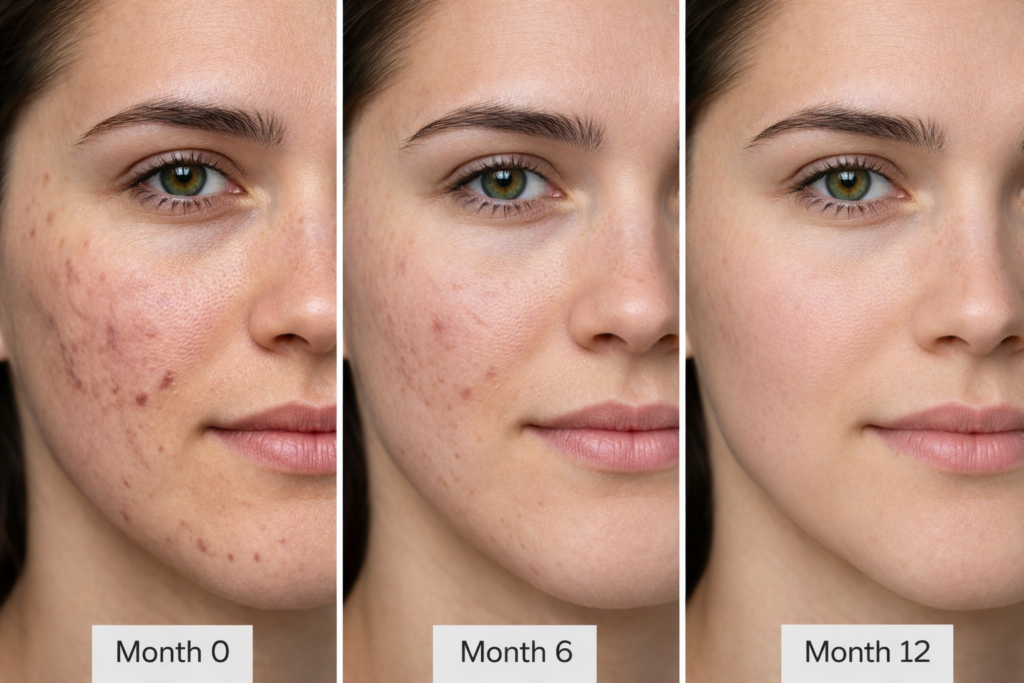
Consultation first: See a board-certified dermatologist ($150-300). Mine photographed my scars, identified types, and created a 12-month roadmap. This saved thousands on wrong treatments.
Laser Therapy: Fractional CO2 ($1,000-1,500/session) gave 40% improvement in boxcar scars, 30% in ice pick scars. IPL ($300-400/session) eliminated 80% of red PIE marks after three sessions.
Chemical Peels: Medium TCA peels (20-35%, $250-400/session) provided noticeable smoothing after three sessions. Downtime: 3-7 days peeling.
Microneedling: Traditional ($250-400/session) gave 40% improvement in rolling scars over four sessions. RF microneedling ($600-1,000/session) is more effective—three sessions improved moderate scars 50%.
Subcision: My favorite for value. Three sessions ($300-400 each) improved rolling scars 60%. Minimal downtime: 5-7 days bruising.
Do Acne Scars Go Away for Teens?
Teenage scars follow the same rules: hyperpigmentation fades naturally (6-18 months), structural scars need treatment. However, teens heal better due to higher collagen production and faster cell turnover.
Safe options for teens:
- Topical retinoids (adapalene, tretinoin)
- Light chemical peels
- Microneedling (age 16+)
- Vitamin C and niacinamide
Wait until 18-20+ for:
- Aggressive laser resurfacing
- Invasive procedures
Starting treatment during teenage years yields significantly better results than waiting.
Do Acne Scars Go Away with Accutane?
Accutane (isotretinoin) doesn’t remove existing scars—it prevents new scarring by eliminating severe inflammatory acne. I took it for six months. My breakouts stopped completely by month three, but existing ice pick and boxcar scars remained unchanged.
Some patients report minor improvement in shallow scars due to changes in collagen production, but don’t expect it to fix pitted scars. Wait 6-12 months after finishing Accutane before aggressive scar treatments. I waited 8 months before starting laser.
Preventing Acne Scars
Prevention is exponentially easier than treatment.
Critical steps:
Treat acne early: See a dermatologist within 3 months of inflammatory acne. Every week you delay increases scarring risk. I waited two years—huge mistake costing $15,000+ in treatments.
Never pick pimples: Picking causes 5x higher scarring risk. That temporary satisfaction isn’t worth the permanent crater.
Use SPF 50 daily: UV exposure darkens hyperpigmentation 50%+, delays healing, increases inflammation, and breaks down collagen. I use EltaMD UV Clear SPF 46 daily. This single change made dark spots fade 40% faster.
Stop smoking: Smokers have 30-40% worse scarring outcomes. Reduces blood flow, decreases oxygen delivery, impairs collagen production.
Early intervention from the American Academy of Dermatology reduces permanent scarring by up to 80%.
Summary : Your Path to Clearer Skin
After battling acne scars for over a decade and achieving 65% improvement, here’s my biggest takeaway: some scars fade naturally, but most need active help.
Dark spots and red marks will likely improve within 6-18 months with tretinoin, vitamin C, niacinamide, and SPF 50. But pitted scars need professional intervention.
I wasted years hoping scars would disappear. What worked was educating myself, finding an excellent dermatologist, committing to consistent at-home treatment, and investing in targeted procedures.
Start with the basics: tretinoin, vitamin C, niacinamide, SPF 50. Give it 6 months. If improvement is inadequate, book a dermatologist consultation.
Your skin has incredible healing capacity, but it needs proper guidance. The journey isn’t quick or easy, but it’s absolutely achievable. I’m living proof.
Disclaimer: This article provides information based on personal experience and research. Always consult a board-certified dermatologist before starting new treatments. Individual results vary.