Navigating the drugstore skincare aisle can feel like a pop quiz you didn’t study for. Between viral TikTok trends promising glass skin overnight and complex 10-step regimens, finding the best skincare routine for teens is overwhelming. Trust me, I’ve seen the damage over-exfoliation and “adult” products can do to young skin.
The truth? You don’t need a shelf full of expensive serums. Teen skin is unique, sensitive, and constantly changing. The goal right now isn’t anti-aging; it’s about balance, protection, and establishing healthy habits. In this guide, we’ll break down exactly how to care for teenage skin safely, effectively, and without breaking the bank.
Why Teen Skin Needs a Different Skincare Routine
You might wonder why you can’t just use the same cream your mom uses or the trendy acid peel your older sister swears by. The biology of teen skin is in a state of flux, making it fundamentally different from adult skin.
Hormonal changes during puberty
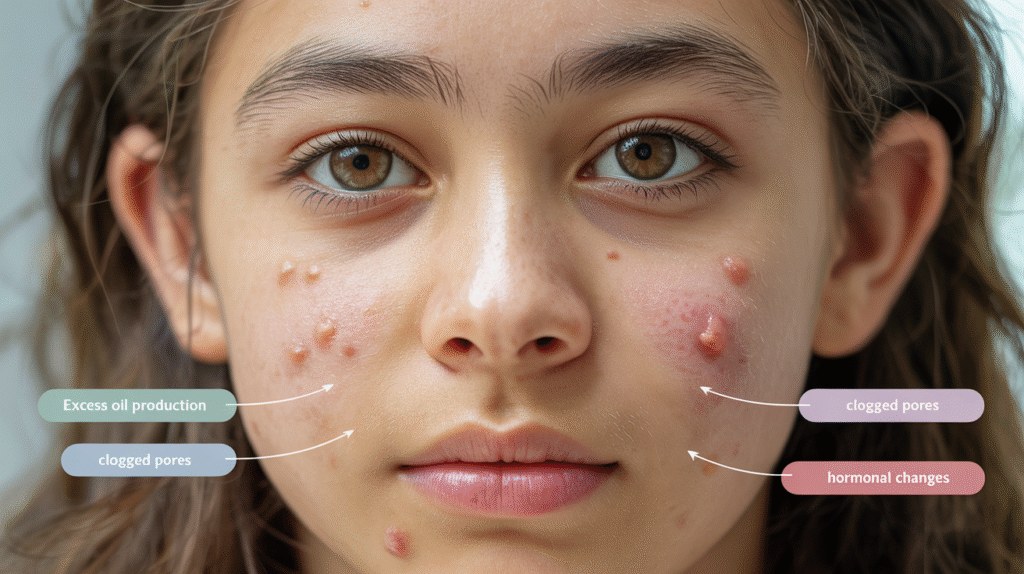
When puberty hits, hormones (specifically androgens) surge. This signals your body to start changing, but it also sends your skin’s oil glands into overdrive. This hormonal rollercoaster is the primary reason why perfectly clear childhood skin can suddenly develop breakouts around age 13.
Increased oil (sebum) production
That shine on your forehead by 2 PM? That’s sebum. While adults often struggle with dryness as collagen production slows, teens are usually battling excess oil. A routine designed for dry, mature skin will be too heavy and comedogenic (pore-clogging) for a teenager, leading to more congestion.
Sensitivity and developing skin barrier
Despite the oiliness, teen skin is surprisingly fragile. The skin barrier is still developing, meaning it’s more prone to irritation from harsh scrubs or strong active ingredients. Treating it aggressively often backfires, causing redness and inflammation rather than clearing acne.
How Teen Skin Is Different From Adult Skin
Adult skin turnover slows down, leading to dullness and wrinkles. Teen skin, however, has rapid cell turnover. It renews itself quickly! This means teens generally don’t need heavy exfoliants or retinol to speed up cell renewal like adults do. Your main focus should be managing the environment—keeping pores clear of the oil and dead skin cells that your body is naturally producing in high volume.
Common Skin Problems Teens Face
Before we build the routine, let’s identify what we are actually fighting.
Acne (whiteheads, blackheads, pimples)
This is the number one concern. Whether it’s comedonal acne (small bumps) or inflammatory papules, almost every teen deals with it.
Oily skin and shine
The “T-zone” (forehead, nose, and chin) is notorious for looking greasy because that’s where the highest concentration of oil glands lives.
Dry or combination skin
Not all teens are oily! Some suffer from dry patches, especially if they are using harsh acne treatments that strip the skin of natural moisture.
Sensitivity and irritation
Redness and stinging are common, often caused by overusing products labeled “maximum strength.”
The Ideal Skincare Routine for Teens (Less Is More)
If there is one takeaway from this guide, let it be this: Less is more.
Why simple routines work best
A simple routine reduces the risk of allergic reactions and irritation. When you layer five different products, you won’t know which one is breaking you out.
Why viral 10-step routines can be harmful
Those viral videos often feature products with high concentrations of acids or fragrances. Using too many actives can destroy your moisture barrier, leading to more acne—a condition dermatologists call “acne cosmetica.”
Importance of consistency over products
The best skincare routine for teens isn’t about the most expensive product; it’s about the product you actually use every day. Consistency beats intensity every time.
Daily Morning Skincare Routine for Teens
Your morning routine is about protection and prevention.
Gentle cleansing
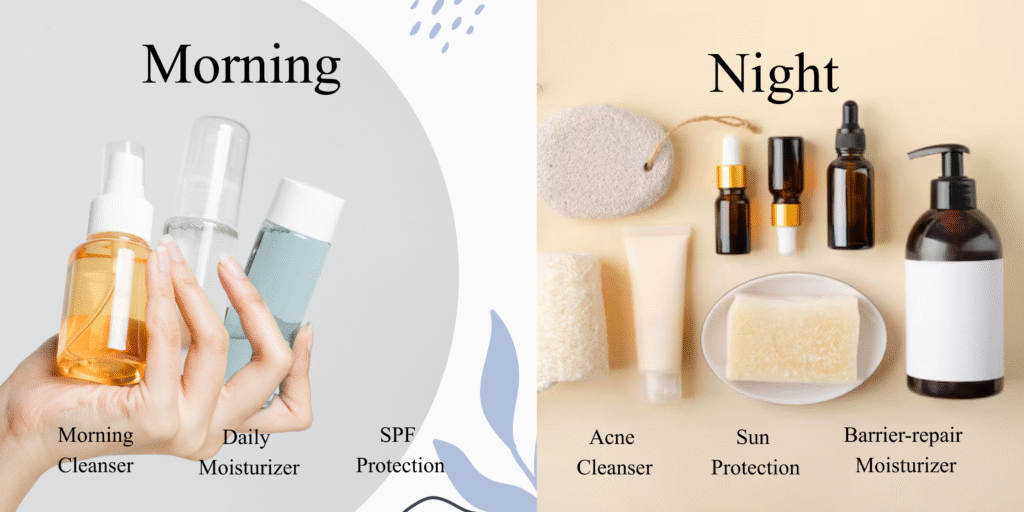
Wash your face with a gentle, sulfate-free cleanser. You want to remove the oil that built up overnight without leaving your face feeling “squeaky” clean (which actually means stripped and dry).
Lightweight moisturizing
Even oily skin needs moisture. Look for “oil-free” or gel-based moisturizers containing hyaluronic acid or glycerin. These hydrate without clogging pores.
Broad-spectrum SPF 30+
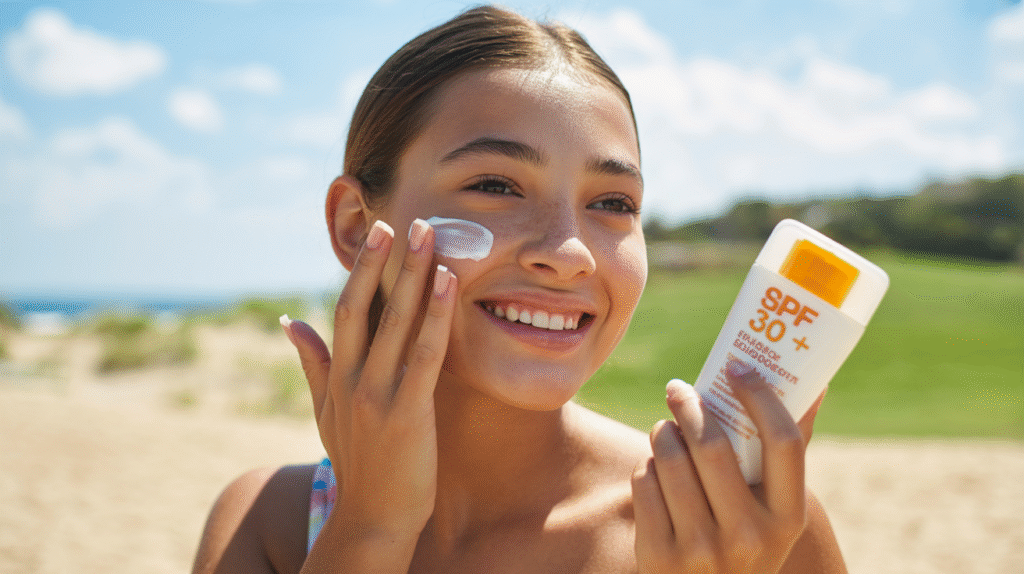
This is non-negotiable. Sun damage starts now. Use a non-comedogenic sunscreen (SPF 30 or higher) every single morning.
Nighttime Skincare Routine for Teens
The evening is for cleaning and treating.
Cleansing again (no harsh scrubbing)
Remove the day’s dirt, oil, and sunscreen. If you wear makeup, consider a “double cleanse”—use micellar water first, followed by your gentle cleanser.
Acne treatment (if needed)
This is where you apply your spot treatment or prescribed medication. Apply it after cleansing and before moisturizer on dry skin to maximize effectiveness and minimize irritation.
Barrier-repair moisturizer
Your skin repairs itself while you sleep. Use a moisturizer that contains ceramides or niacinamide to support the skin barrier.
Best Skincare Routine for Teens With Acne-Prone Skin
Fighting acne requires specific ingredients, but balance is key.
Salicylic acid vs benzoyl peroxide
- Salicylic Acid (BHA): Best for blackheads and oily skin. It dives deep into the pore to dissolve oil.
- Benzoyl Peroxide: Best for red, inflamed pimples (whiteheads). It kills the bacteria causing the acne.
Spot treatments vs full-face treatments
If you have one or two pimples, use a spot treatment. If you have widespread acne, use a lower-strength wash or cream over the whole face to prevent future breakouts.
Preventing dryness and irritation
Acne products are drying. Always follow up with moisturizer. If your skin gets flaky, switch to using your treatment every other night.
Best Skincare Routine by Skin Type
Tailor your approach based on your specific needs.
Normal skin
- Cleanser: Gentle foaming wash.
- Moisturizer: Standard lotion.
- Sunscreen: Any SPF 30.
Dry skin
- Cleanser: Cream or lotion cleanser (non-foaming).
- Moisturizer: Thicker cream with ceramides.
- Avoid: High concentrations of salicylic acid.
Oily skin
- Cleanser: Gel cleanser or one with salicylic acid.
- Moisturizer: Oil-free gel moisturizer.
- Sunscreen: Matte finish or mineral sunscreen.
Combination skin
- Routine: Treat zones differently. Use a lighter moisturizer on the T-zone and a richer one on the cheeks.
Acne Treatments for Teens: What Really Works
Forget toothpaste on pimples. Here is the science-backed stuff.
Benzoyl peroxide (when to use)
Use this for red, angry breakouts. Warning: It bleaches towels and pillowcases! Use white linens or rinse thoroughly.
Salicylic acid (when to use)
Use this for clogged pores and blackheads. It’s often found in cleansers, which is a great, gentle way to introduce it to teen skin.
Niacinamide & barrier-supporting ingredients
Niacinamide is a superstar. It regulates oil production and calms redness without the irritation of stronger acids. It’s perfect for sensitive teen skin.
Should Teens Use Retinol or Active Ingredients?
This is a hot topic. You see teens buying retinol, but is it safe?
When retinol may be appropriate
Generally, OTC retinol is for anti-aging and isn’t necessary for teens. However, a dermatologist might prescribe a retinoid (like Adapalene/Differin) specifically for acne. This is different from anti-aging retinol.
Risks of early retinoid use
Using strong retinoids without guidance can cause “retinoid burn,” leading to peeling, raw skin, and increased sun sensitivity.
Ingredients teens should avoid or limit
- High-percentage AHAs (Glycolic acid over 10%)
- Vitamin C serums (often too unstable/irritating for young skin)
- Essential oils and heavy fragrances
Sunscreen for Teens: Why SPF Is Non-Negotiable
Mineral vs chemical sunscreen
- Mineral (Zinc/Titanium): Less irritating, great for sensitive skin, works immediately.
- Chemical: Often lighter and leaves no white cast, better for darker skin tones.
SPF myths (sun does NOT cure acne)
Many teens think the sun dries up acne. It actually inflames the skin and causes post-acne dark spots (hyperpigmentation) to linger for months.
Best sunscreen practices for teens
Find a formula you like. If it feels greasy, you won’t wear it. Look for “sheer,” “matte,” or “fluid” on the label.
Weekly Skincare Extras (Masks & Exfoliation)
Gentle exfoliation (1–2 times weekly max)
Skip the apricot scrub with the jagged walnut shells. A chemical exfoliant (like a mild lactic acid) or a very soft washcloth is enough.
Hydrating masks vs clay masks
- Clay Masks: Great for sucking oil out of the T-zone. Use once a week.
- Hydrating/Sheet Masks: Fun and safe for almost everyone to boost moisture.
What to avoid
Peel-off masks that pull at the skin and pore vacuums. These can damage capillaries and cause bruising.
Skincare Tips Dermatologists Recommend for Teens
Patch testing new products
Before slathering a new cream all over your face, put a tiny bit on your inner arm or behind your ear. Wait 24 hours to see if you react.
Avoiding fragrance & harsh alcohols
“Fragrance-free” is your friend. Artificial scents are a leading cause of contact dermatitis (allergic rash).
One new product at a time
Introduce one new product every two weeks. If you start three things at once and break out, you won’t know the culprit.
Skincare Mistakes Teens Should Avoid
Over-exfoliating
If your face looks shiny and feels tight, you’ve over-exfoliated. Stop all actives and focus on hydration for a week.
Using adult anti-aging products
Your skin has plenty of collagen! You don’t need peptide creams or firming serums. They are too heavy and a waste of money for teens.
Picking or popping pimples
This pushes bacteria deeper into the pore, increases inflammation, and guarantees a scar. Use a pimple patch (hydrocolloid bandage) instead to keep your hands off.
When Should a Teen See a Dermatologist?
Sometimes, over-the-counter (OTC) products aren’t enough.
Severe or cystic acne
If your acne is painful, deep under the skin, or leaving scars, see a doctor. This type of acne usually requires prescription strength treatment.
Acne scarring
If you notice indentations or permanent marks, professional help is needed.
No improvement after OTC treatments
If you’ve tried a consistent routine with salicylic acid or benzoyl peroxide for 3 months with no change, it’s time for a pro.
Frequently Asked Questions
What is the best skincare routine for teens?
The best routine is a simple three-step process: A gentle cleanser, a lightweight moisturizer, and SPF 30+ in the morning. At night, repeat the cleanse and moisturize, adding a spot treatment only if needed.
Should teenagers use skincare every day?
Yes! Consistency is key. Cleansing and moisturizing should be done daily, but treatments like exfoliation should be limited to 1-2 times a week.
Is retinol safe for teens?
Retinol is generally intended for anti-aging. However, dermatologists may prescribe Adapalene (a type of retinoid) for acne. Teens should only use retinoids for acne under guidance or by following strict instructions for OTC Adapalene.
What ingredients should teens avoid in skincare?
Teens should avoid high concentrations of exfoliating acids, heavy oils (like coconut oil on the face), essential oils, and anti-aging ingredients like peptides or stem cells.
How can teens get rid of acne safely?
Use ingredients like salicylic acid or benzoyl peroxide. Avoid picking pimples. If home treatments don’t work after 12 weeks, consult a dermatologist.
Do teens really need sunscreen?
Absolutely. Sun damage accumulates over time, and UV rays worsen acne scarring and inflammation.
How often should teens exfoliate their skin?
No more than 1 to 2 times per week. Young skin turns over cells naturally and quickly; over-exfoliating causes irritation.
What is the best face wash for teenage acne?
A face wash containing 2% Salicylic Acid is excellent for oily and acne-prone skin. For sensitive skin, a gentle foaming cleanser followed by a topical treatment is better.
Can teens use anti-aging skincare products?
It is not recommended. These products are often too rich and can clog young pores, leading to breakouts.
When should a teen see a dermatologist for acneIf acne is cystic (deep and painful), leaving scars, or affecting the teen’s self-esteem and mental health, schedule an appointment immediately.